
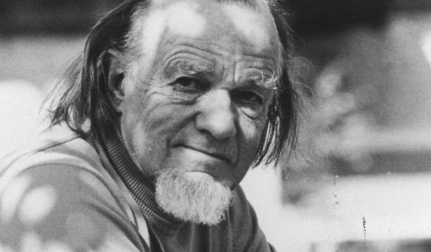
On this day in 1979, Francis Schaeffer gave an historicspeech which would form the basis of his landmark book A ChristianManifesto. He asserted that”the basic problem with Christians in this country” over the last twogenerations or more has been that “they have seen things in bits andpieces instead of totals.” Theresult has been a kind of hesitant hit-or-miss approach to the dire dilemmas ofour day: “They have very gradually become disturbed over permissiveness,pornography, the public schools, the breakdown of the family, and finallyabortion. But they have not seenthis as a totality–each thing being a part, a symptom, of a much largerproblem.”
He said that part of the reason for this was: “They failedto see that all of this has come about due to a shift in worldview–that is,through a fundamental change in the overall way people think a view the worldand life as a whole.”
When the subject of worldview comes up, we generally think of philosophy. We think of intellectual niggling. We think of the brief and blindingoblivion of ivory tower speculation, of thickly obscure tomes, and ofinscrutable logical complexities.
In fact, a worldview is as practical as potatoes. It is less metaphysical than understandingmarginal market buying at the stock exchange or legislative initiatives incongress. It is less esoteric thantyping a book into a laptop computer or sending a fax across the continent. It is instead as down to earth astilling the soil for a bed of zinnias.
The word itself is a poor English attempt at translating theGerman weltanshauung. It literally means a life perspectiveor a way of seeing. It is simplythe way we look at the world.
You have a worldview. I have a worldview. Everyone does. It is ourperspective. It is our frame ofreference. It is the means bywhich we interpret the situations and circumstances around us. It is what enables us to integrate allthe different aspects of our faith, and life, and experience.
Alvin Toffler, in his book Future Shock said: “Every person carries in his head a mental modelof the world, a subjective representation of external reality.”
This mental model is, he says, like a giant filingcabinet. It contains a slot forevery item of information coming to us. It organizes our knowledge and gives us a grid from which to think. Our mind is not as Pelagius, Locke,Voltaire, or Rousseau would have had us suppose—a tabla rasa, a blank and impartial slate. None of us are completely open-minded or genuinelyobjective. “When we think,” saideconomic philosopher E.F. Schumacher, “we can only do so because our mind isalready filled with all sorts of ideas with which to think.” These more or less fixed notions makeup our mental model of the world, our frame of reference, ourpresuppositions–in other words, our worldview.
Thus, a worldview is simply a way of viewing the world. Nothing could be simpler. But by raising the issue when he didand how he did, Francis Schaeffer altogether altered the terms of thetheological debate in America and ushered in a new wave of reform.
